

A new state ranking by 3 Day Blinds shows how homeowners are bridging the gap between outgrowing their homes and keeping the cheap mortgages they already have. The ranking, called the Great American Nesting Index, measures where homeowners have decided to stay put and reinvest in their current homes.
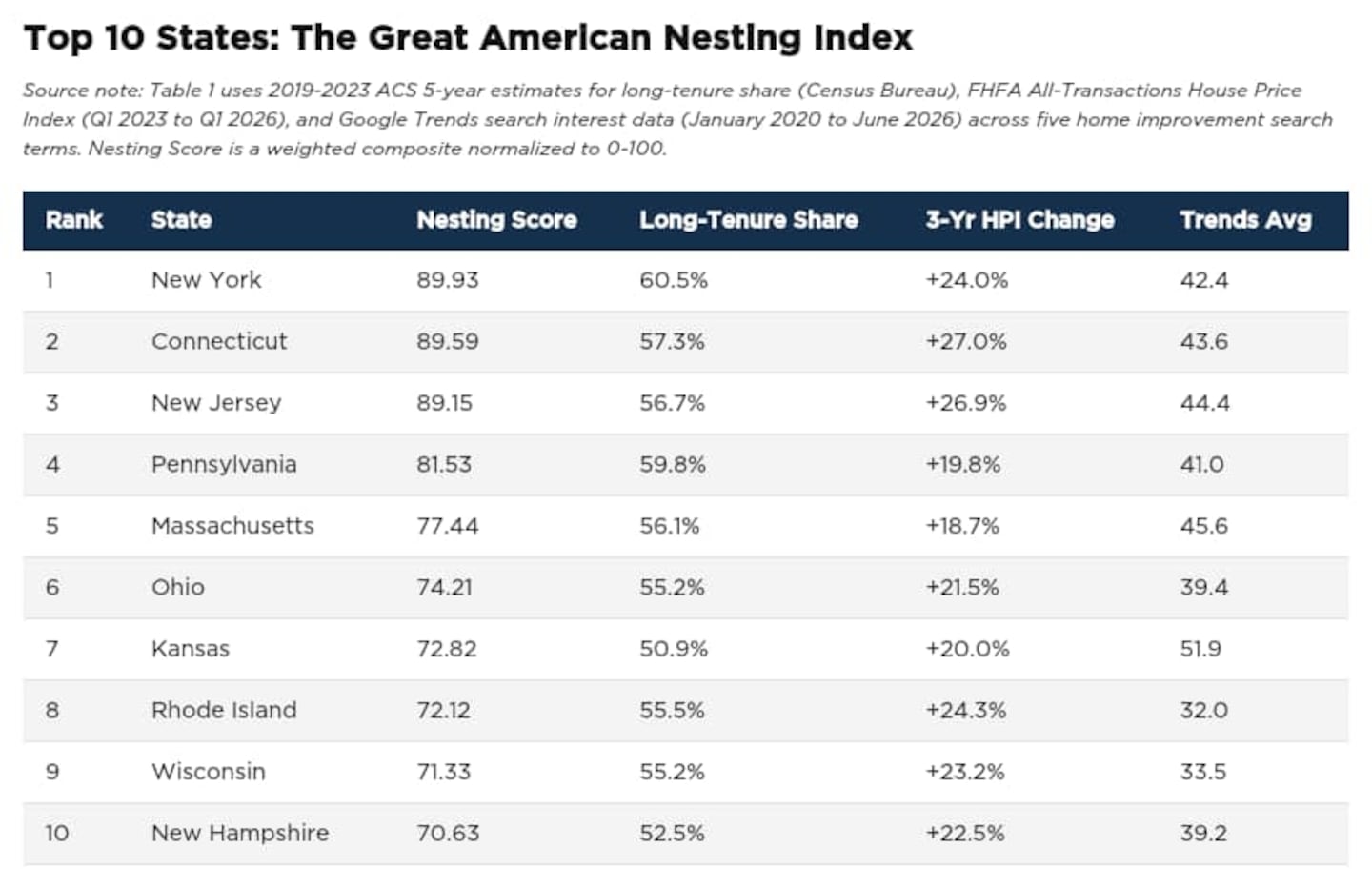
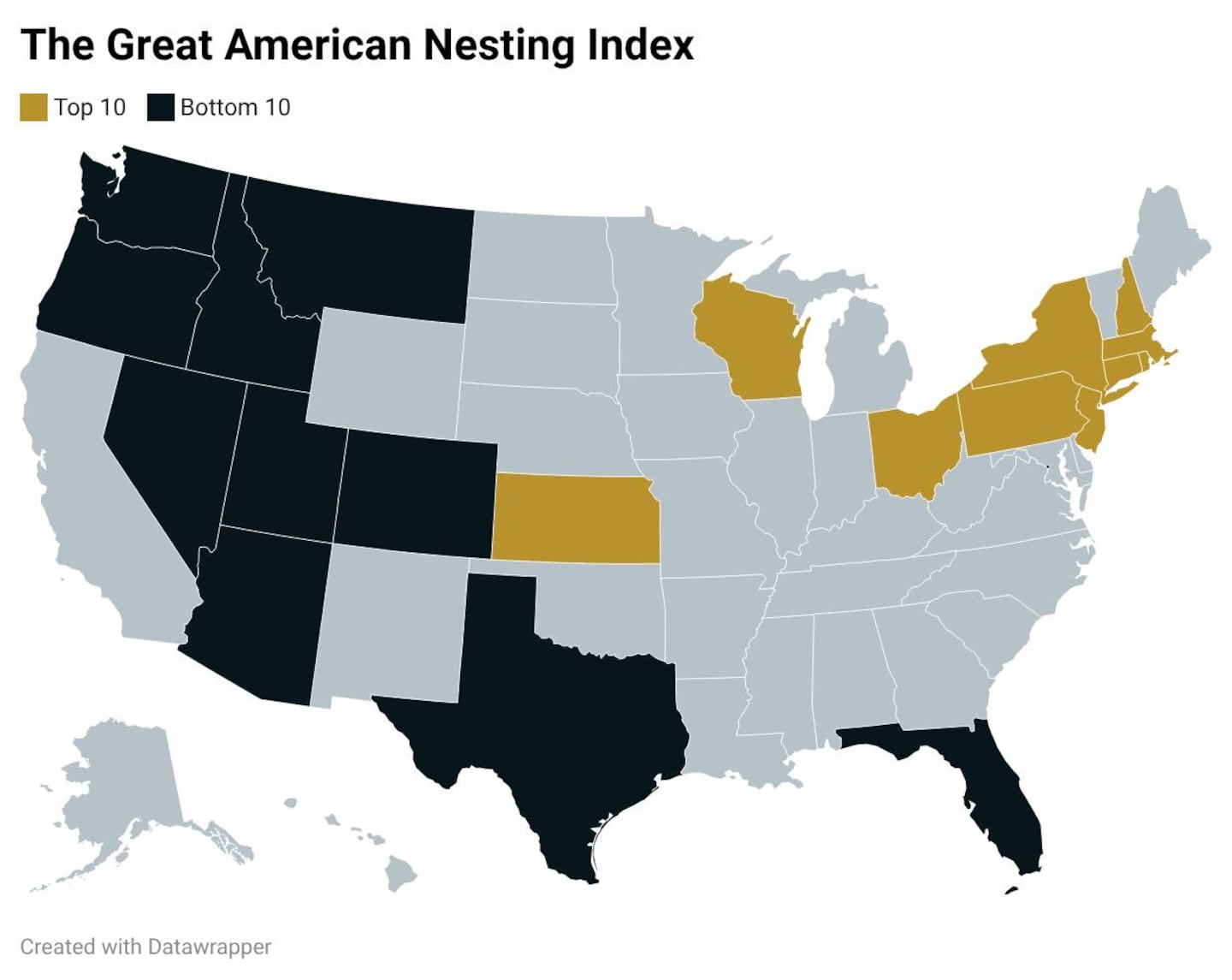
The top five states in the Index are all in the Northeast, with New York at number one. The typical story is that these homeowners are trapped by their pre-2022 mortgage rates. The study reads the same numbers another way: When moving stops making sense, renovation takes its place.
3 Day Blinds
How the Ranking Works
The Index scores all 50 states and Washington, D.C., on three public datasets, not a survey. Long-term tenure comes from the U.S. Census Bureau's American Community Survey, measured as the share of owners who moved in before 2010. Price appreciation comes from the Federal Housing Finance Agency's house price index, covering Q1 2023 through Q1 2026. Renovation interest comes from Google Trends, averaged across five home improvement search terms from 2020 through mid-2026. Tenure counts for 40% of the score, appreciation 35%, and search interest 25%. The Index was compiled in June 2026.
3 Day Blinds
The Northeast Is Where People Stay
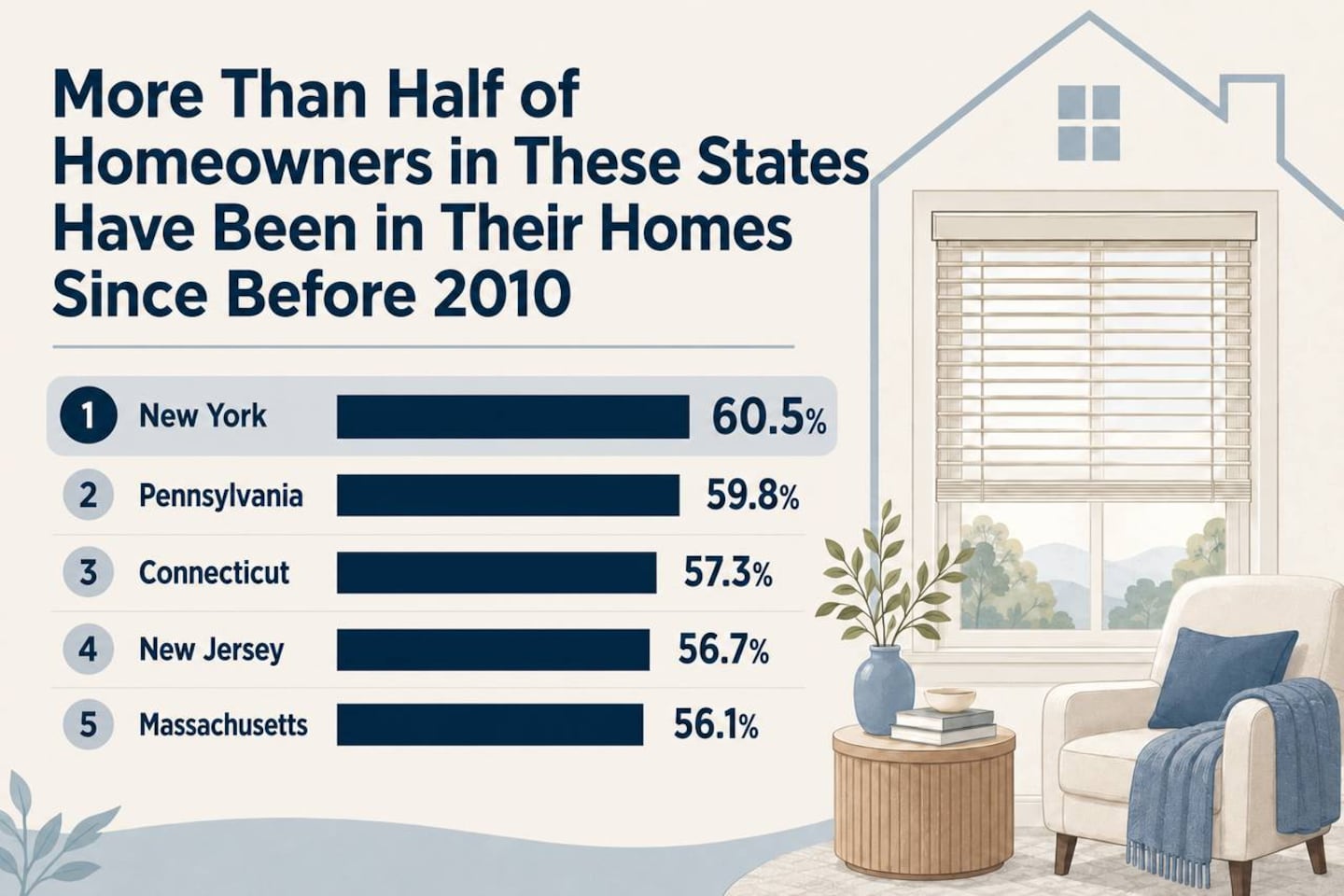
New York, Connecticut, New Jersey, Pennsylvania, and Massachusetts take the top five spots in that order. In every one, more than half of homeowners have been in their houses since before 2010. New York leads at 60.5%, tied, oddly, with West Virginia.
3 Day Blinds
So what keeps them there? Age is a big part of it. Nationally, more than a third of owner-occupied homes belong to Americans 65 and older, and with senior living costs climbing, many of them own outright and have no reason to leave. The region also holds some of the country's oldest housing stock, and homes there rarely trade hands. The result is a tight-supply loop. Buyers can't find much, owners stay where they are, and their attention turns to the houses themselves.
Pennsylvania shows the scale behind the percentages. Its 59.8% long-tenure share works out to more than 2.17 million households in place for 14 years or longer.
The Equity Math Adds Up
3 Day Blinds
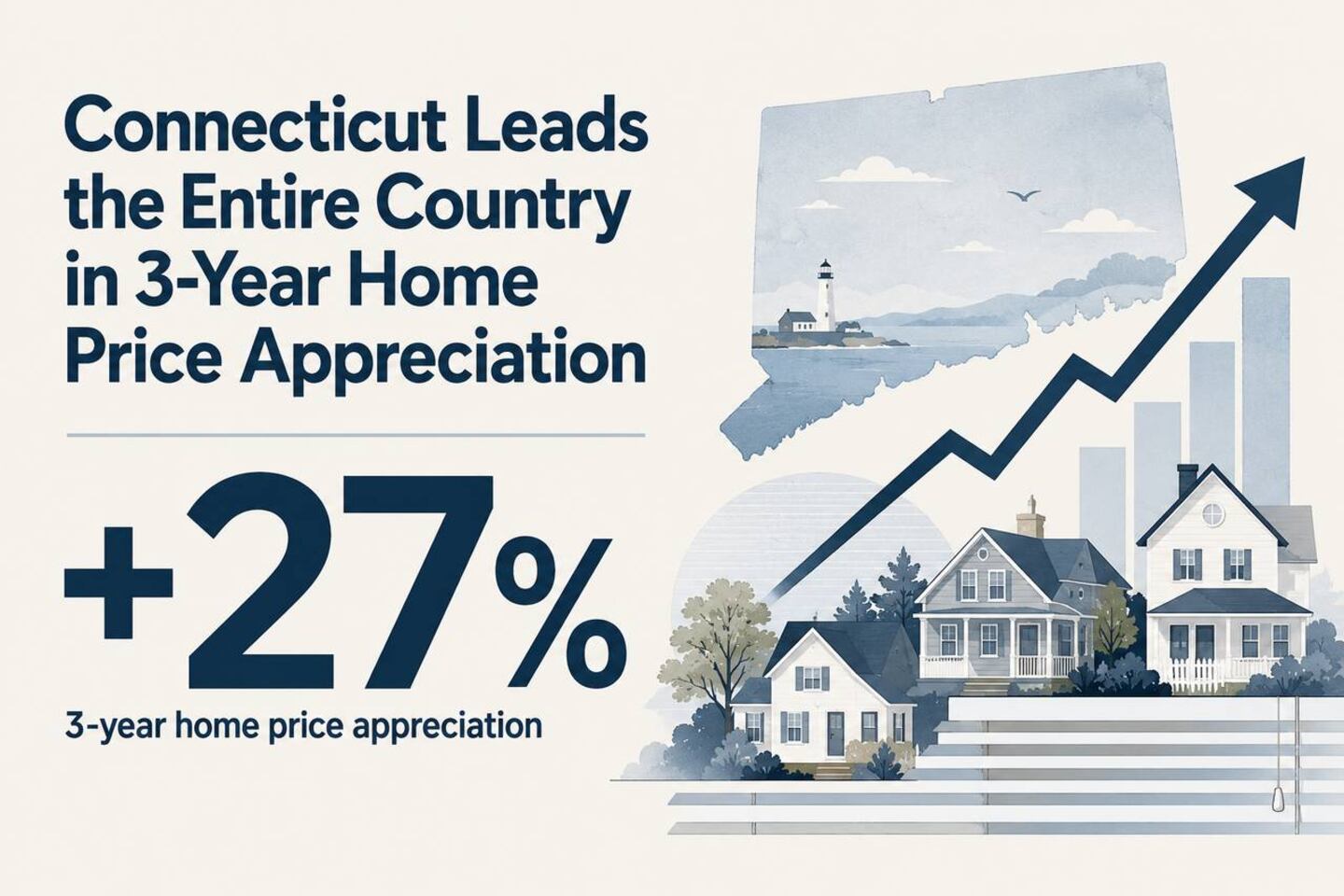
The Index also shows why staying has paid off. Connecticut leads the country in three-year home price appreciation at 27%, with New Jersey a close second at 26.9%. Pair that with the rate picture, and the incentive gets obvious. An owner who bought before rates jumped has watched the home gain more than a quarter of its worth while paying a mortgage priced for a different market. Selling means giving that rate up and buying back into the same expensive region.
Connecticut homeowners are seeing that gain and acting on it. According to the Index, they're tapping equity through a home equity line of credit (HELOC) and second liens and putting it back into the property. New Jersey follows the same script: 26.9% appreciation, a 56.7% long-tenure share, and the highest renovation search interest among the top four states.
The Sun Belt Sits at the Bottom
3 Day Blinds
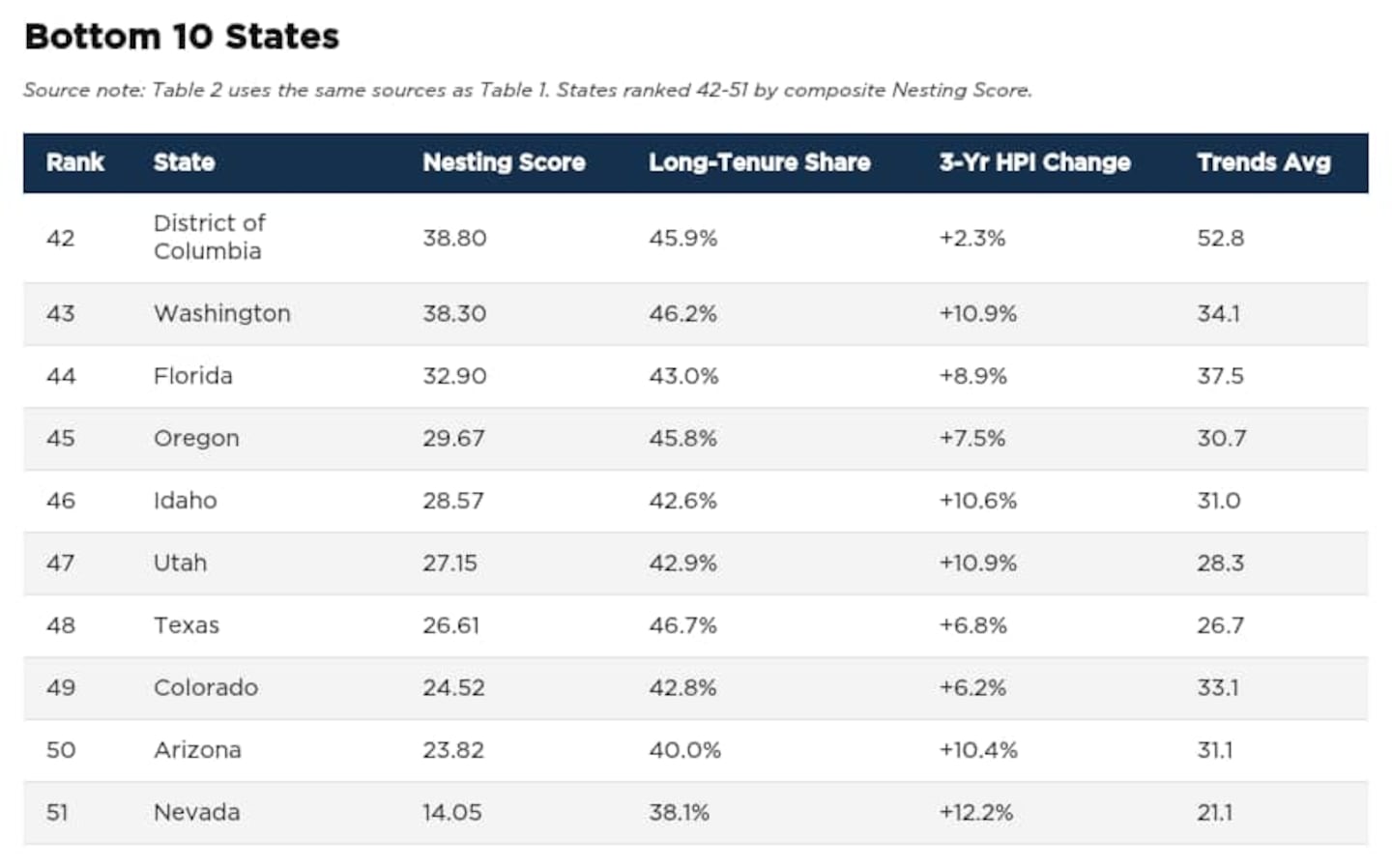
The five lowest-ranked states are either in the Sun Belt or the Mountain West, and these too hold a pattern. Nevada, Arizona, Colorado, Texas, and Utah all saw large numbers of new arrivals during the COVID-19 pandemic. Nevada lands dead last, with the country's lowest long-tenure share at 38.1%, meaning fewer than 2 in 5 owners there moved in before 2010.
According to the Census Bureau, Texas led the nation in movers, gaining hundreds of thousands between 2020 and 2023. Arizona and Nevada pulled heavily from California, and Utah and Colorado saw a boom in population tied to recreation and tech relocation.
These recent arrivals pull the average tenure down. It's a simple answer to what looks like a weak market. They aren't weak, just young in terms of tenure.
The Two Outliers: Kansas and Washington, D.C.
Kansas ranks seventh in the Index and posts the highest home improvement search interest of any state, right as Harvard's Joint Center for Housing Studies projects a slowdown in the national remodeling market. The median home price in Kansas sits well below the national average, which leaves more room in the budget. Wages are moving, too. Kansas led the nation in the third quarter of 2025 with 6.5% gross domestic product growth and 6.3% personal income growth. An affordable market plus rising paychecks, and the nesting follows.
Washington, D.C. breaks the pattern from the other direction. Its three-year appreciation is just 2.3%, nearly 25 percentage points below Connecticut, and the region lost more than 62,000 federal jobs between January 2025 and January 2026. Even so, home prices have held up, propped up by a near-freeze on new residential construction. D.C. is nesting for its own reasons, a supply squeeze rather than the long tenure and rising equity behind the rest of the map.
The lock-in effect has mostly been told as a story of constraint. The Index looks at what owners are doing inside it, and the answer, at least in the states where people have stayed longest, is that they're building on what they've got.
This story was produced by 3 Day Blinds and reviewed and distributed by Stacker.


