The Federal Trade Commission is warning consumers about a growing wave of imposter scams, but the agency’s top consumer protection official says the responsibility does not rest solely with the criminals carrying them out.
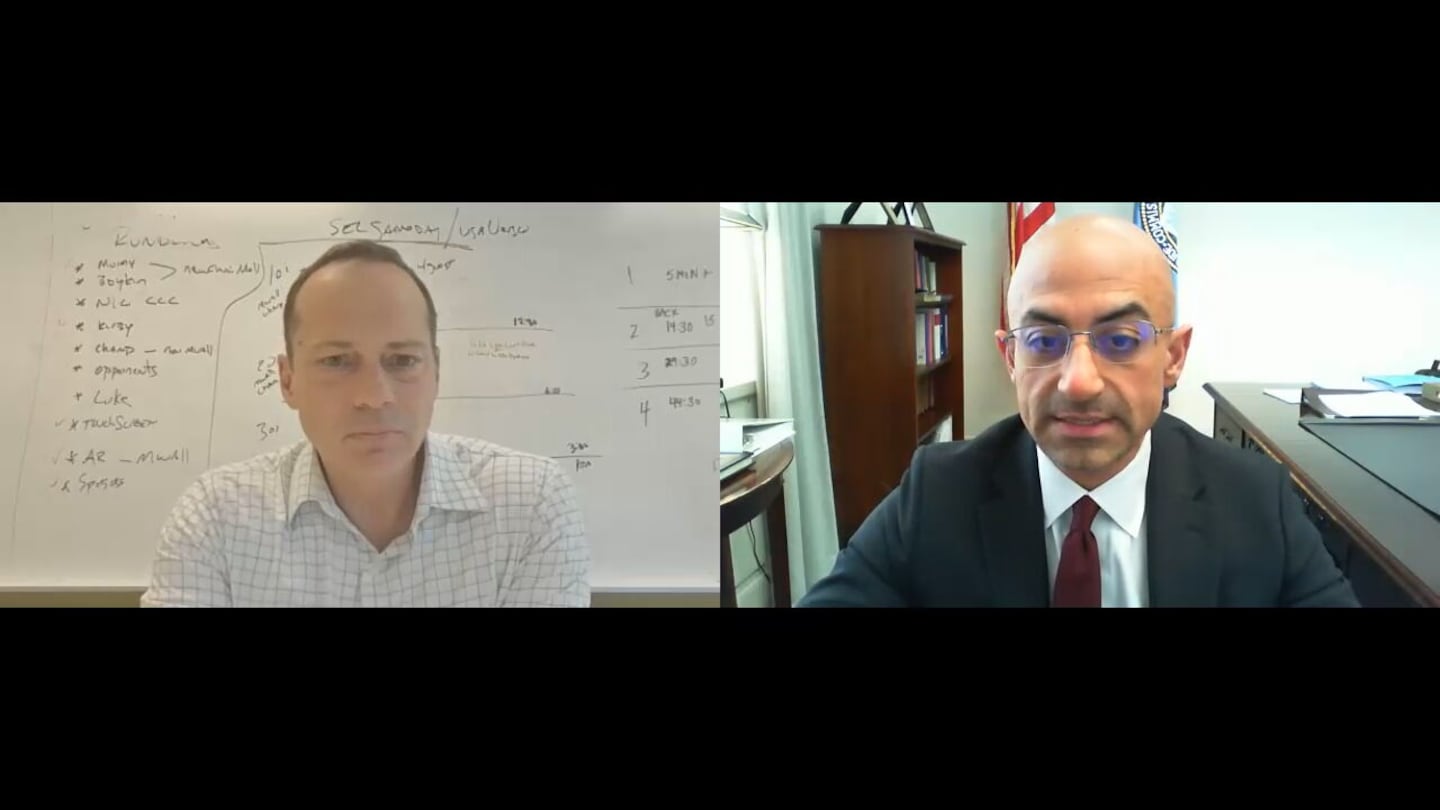
In an interview with Channel 2 Action News, Chris Mufarrige, director of the FTC’s Bureau of Consumer Protection, said major technology companies such as Google and Meta should be doing more to prevent scammers from reaching consumers through their platforms.
“The tech platforms have a role to play here in terms of solving the problem, and we just don’t think that they’re doing enough,” Mufarrige said.
The comments come as online scams increasingly rely on sophisticated advertising, artificial intelligence and social media impersonation schemes to reach victims.
While Mufarrige declined to discuss any potential investigations involving specific companies, he said the issue remains a major concern for the agency.
“I can’t speak to non-public investigations, but this is an area of concern for us, and we’re focused on trying to solve this problem,” Mufarrige said.
When Channel 2 Consumer Investigator Justin Gray asked whether the tech companies were doing enough to address the problem, Mufarrige responded simply: “No.”
Last month, Channel 2 reported on an AI-generated online advertisement for a Barbie Dream House that appeared to be connected to retailer Wayfair. Nick Saunders said the ad led to thousands of dollars in fraudulent charges.
“It came up looking like Wayfair,” Saunders said.
Earlier this year, Channel 2 Action News Investigates also reported on AI-generated impersonation scams appearing on Facebook.
One victim, Kelly McCormack, discovered scammers had used her likeness in fabricated social media posts. The posts included images that appeared to show a hospitalized family member and luxury purchases that had no connection to her.
“Not my purse. Not my father,” McCormack said.
Meta, the parent company of Facebook and Instagram, said it removed more than 159 million scam advertisements in 2025, with 92% taken down before being reported by users.
The company also said it has worked with law enforcement agencies to target scam operations in Southeast Asia.
Google said it blocked or removed more than 8.3 billion advertisements in 2025, including 602 million for violations of its scam-related advertising policies.
In a statement to Channel 2 Action News, a Google spokesperson said:
“Scams have no place on Google, and AI helps us stay a step ahead. Last year, we caught over 99% of policy-violating ads before they ever served.”
The FTC says those efforts are not enough.
“We cannot have an online economy where it is this easy to impersonate somebody,” Mufarrige said.
The FTC has not filed enforcement actions against Google or Meta related to online scam activity. However, the agency has the authority to bring legal action against companies if it determines they violated consumer protection laws.
Mufarrige says this will be one of the agency’s top priorities through the remainder of 2026.
[DOWNLOAD: Free WSB-TV News app for alerts as news breaks]
TRENDING STORIES:
- Fight in restroom leads to student shot at Georgia high school; suspect in custody
- Man busted through closet wall in metro Atlanta apartment, attacked teenage girl, police say
- Student found with weapon at Cobb middle school, district says
[SIGN UP: WSB-TV Daily Headlines Newsletter]
©2026 Cox Media Group


